

Negative Splits: The Secret to Finishing Strong
Negative Splits: The Secret to Finishing Strong
If you've ever started a run feeling amazing, only to struggle through the last mile, you're not alone.
One of the most effective pacing strategies in running is something called a negative split. It's used by elite marathoners, experienced 5K runners, and, perhaps surprisingly, it's just as beneficial for beginners and walkers.
What Is a Negative Split?
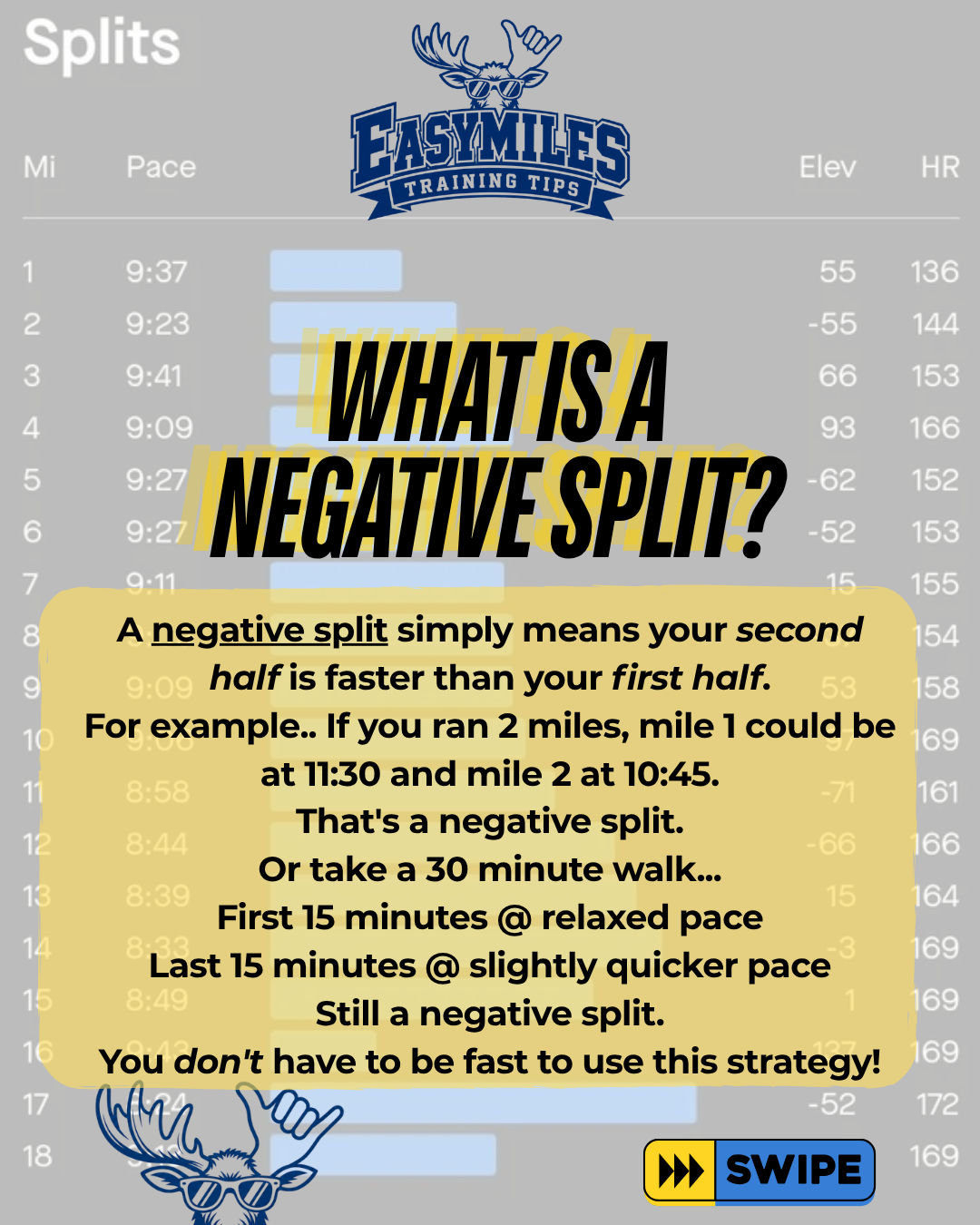
A negative split simply means completing the second half of your workout faster than the first half.
For example:
3-Mile Run
Mile 1: 11:00
Mile 2: 10:30
Mile 3: 10:00
Even a walking workout can use negative splits.
30-Minute Walk
First 10 minutes: Comfortable pace
Next 10 minutes: Brisk pace
Final 10 minutes: Fastest comfortable pace
The goal isn't to sprint at the end.
The goal is to finish feeling stronger than you started.
Why Do Negative Splits Work?
Many runners make the mistake of starting too fast simply because they feel fresh.
The problem?
Your body isn't fully ready yet.
During the first several minutes of exercise:
Heart rate is still increasing.
Blood flow to your muscles is improving.
Oxygen delivery becomes more efficient.
Body temperature rises.
Your muscles become more elastic.
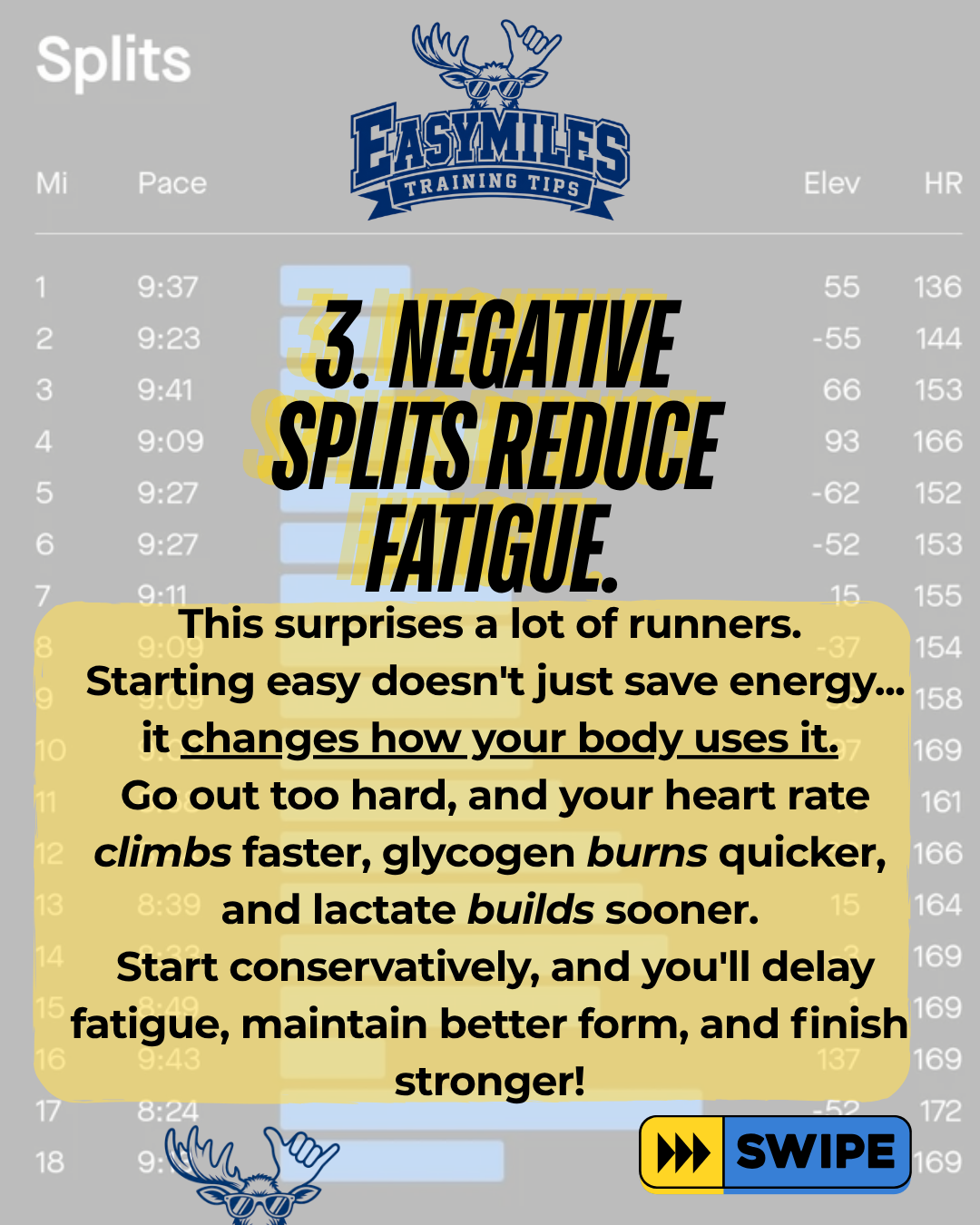
Starting aggressively before these systems catch up causes unnecessary fatigue later.
Five Benefits of Running Negative Splits
1. You Delay Fatigue
Running slightly easier early helps preserve glycogen stores, delays lactate accumulation, and reduces the chance of hitting the wall.
2. Better Running Form
Fatigue causes form to break down.
Finishing stronger means you're maintaining better mechanics for more of the run.
3. Improved Running Economy
Once your body reaches a steady rhythm, every stride becomes more efficient.
That means more of your energy moves you forward instead of fighting fatigue.
4. Stronger Mental Game
Holding yourself back takes discipline.
Learning patience early in a run often leads to more confidence later in races.
5. Faster Overall Performances
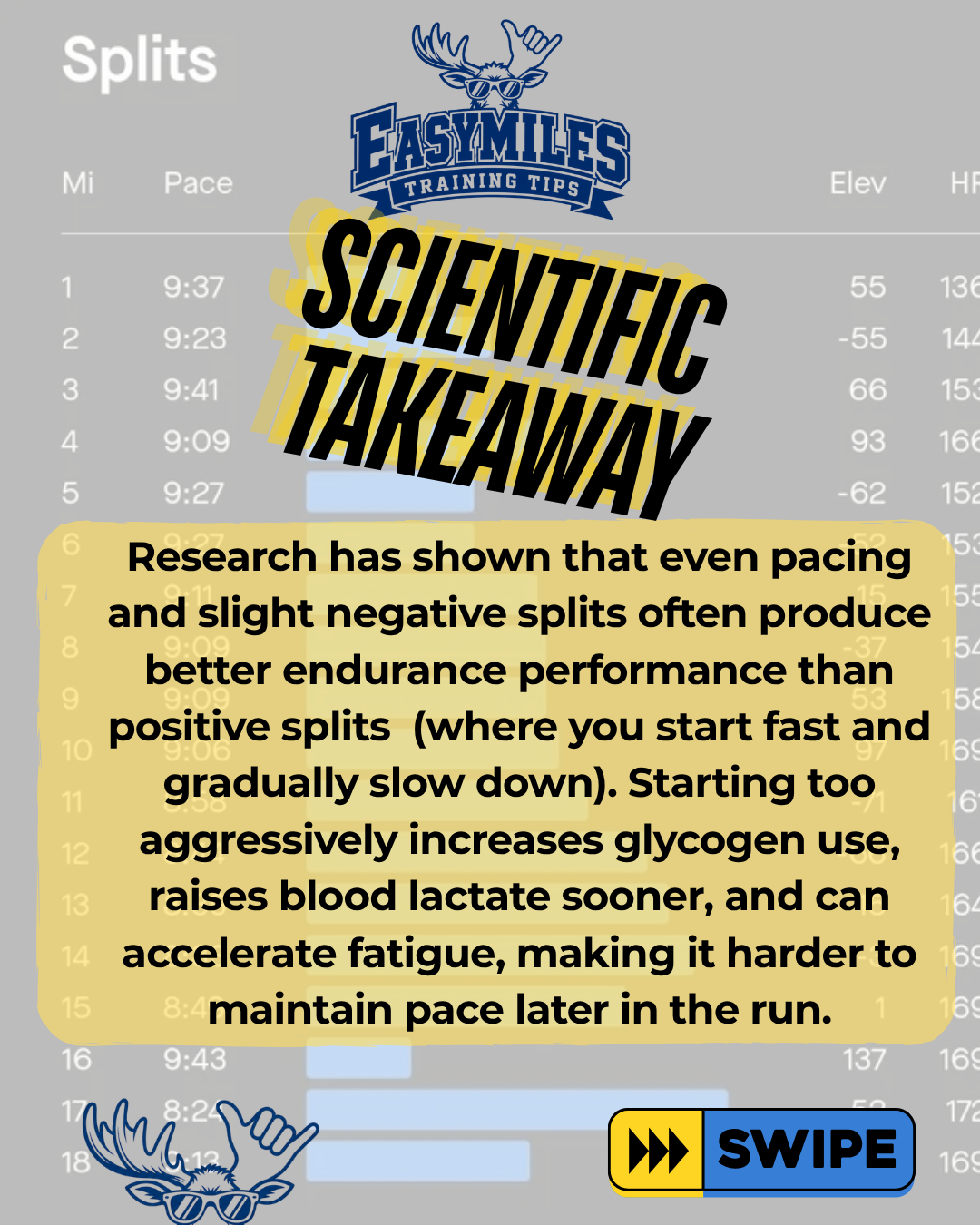
Many successful marathon, half marathon, and 5K performances are run with even pacing or slight negative splits.
While every race is different, starting conservatively often produces a stronger finish than going out too hard.
Negative Split Workouts
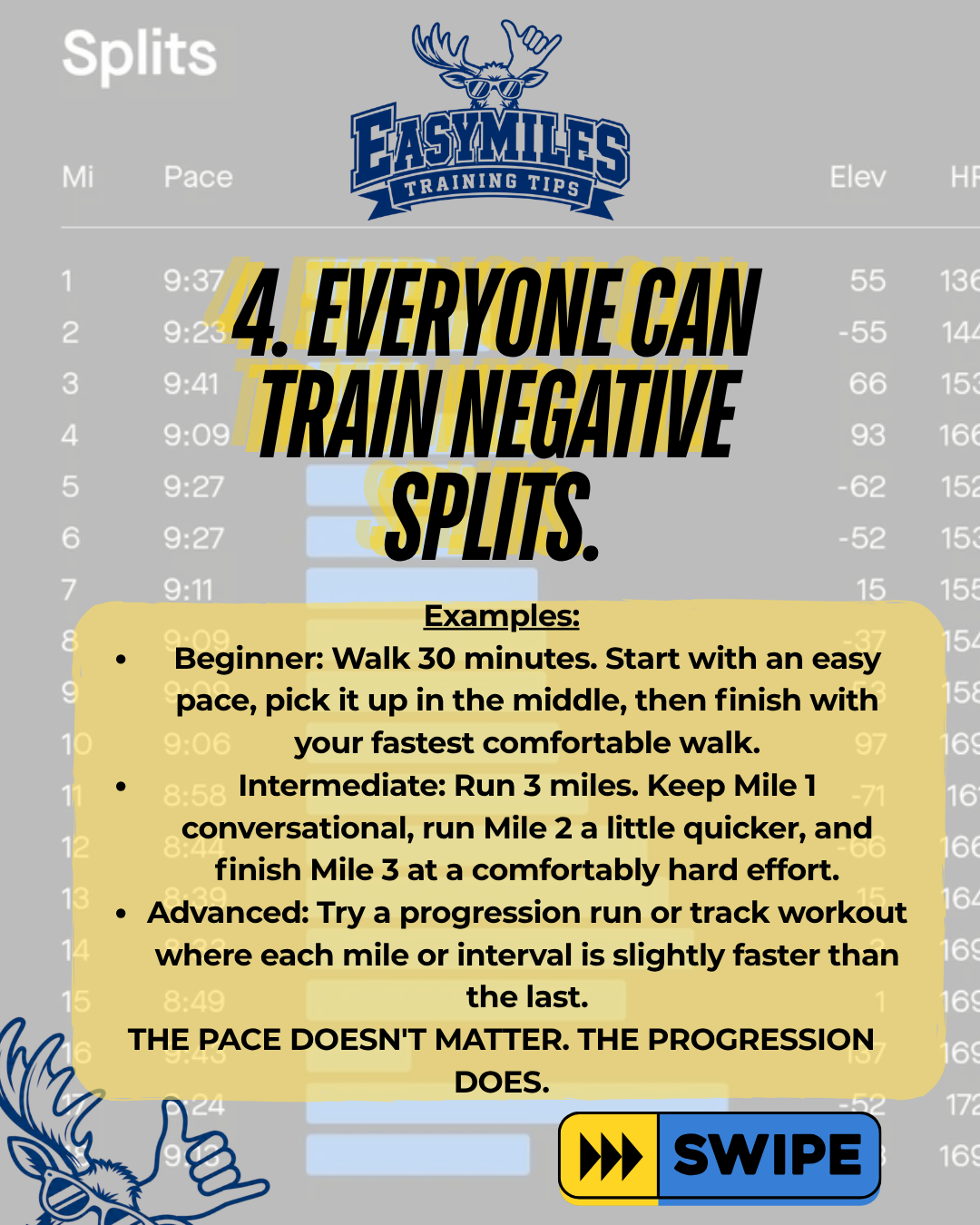
Beginner
Neighborhood
30 minutes
10-minute easy walk
10-minute brisk walk
10-minute fastest comfortable walk
Track
8 laps
Laps 1-3: Easy
Laps 4-6: Moderate
Laps 7-8: Strongest pace
Intermediate
Neighborhood
3 miles
Mile 1: Conversational pace
Mile 2: Moderate pace
Mile 3: Comfortably hard
Track
8 x 400 meters
Repeats 1-2: Easy
Repeats 3-5: Steady
Repeats 6-8: Progressively faster
Each repeat should be a little faster than the one before it.
Advanced
Neighborhood
6 miles
Miles 1-2: Easy
Miles 3-4: Marathon effort
Miles 5-6: Threshold effort
Track
1600 meters
1200 meters
800 meters
400 meters
Run each segment faster than the previous one.
Finish with your fastest 400.
The Hardest Part: Holding Back
One of the biggest challenges with negative splits isn't physical.
It's mental.
Your first mile should almost feel too easy.
Many runners think,
"I should be going faster."
Resisting that temptation is what allows you to finish strong.
Remember:
Races are rarely won in the first mile. They're often lost there.
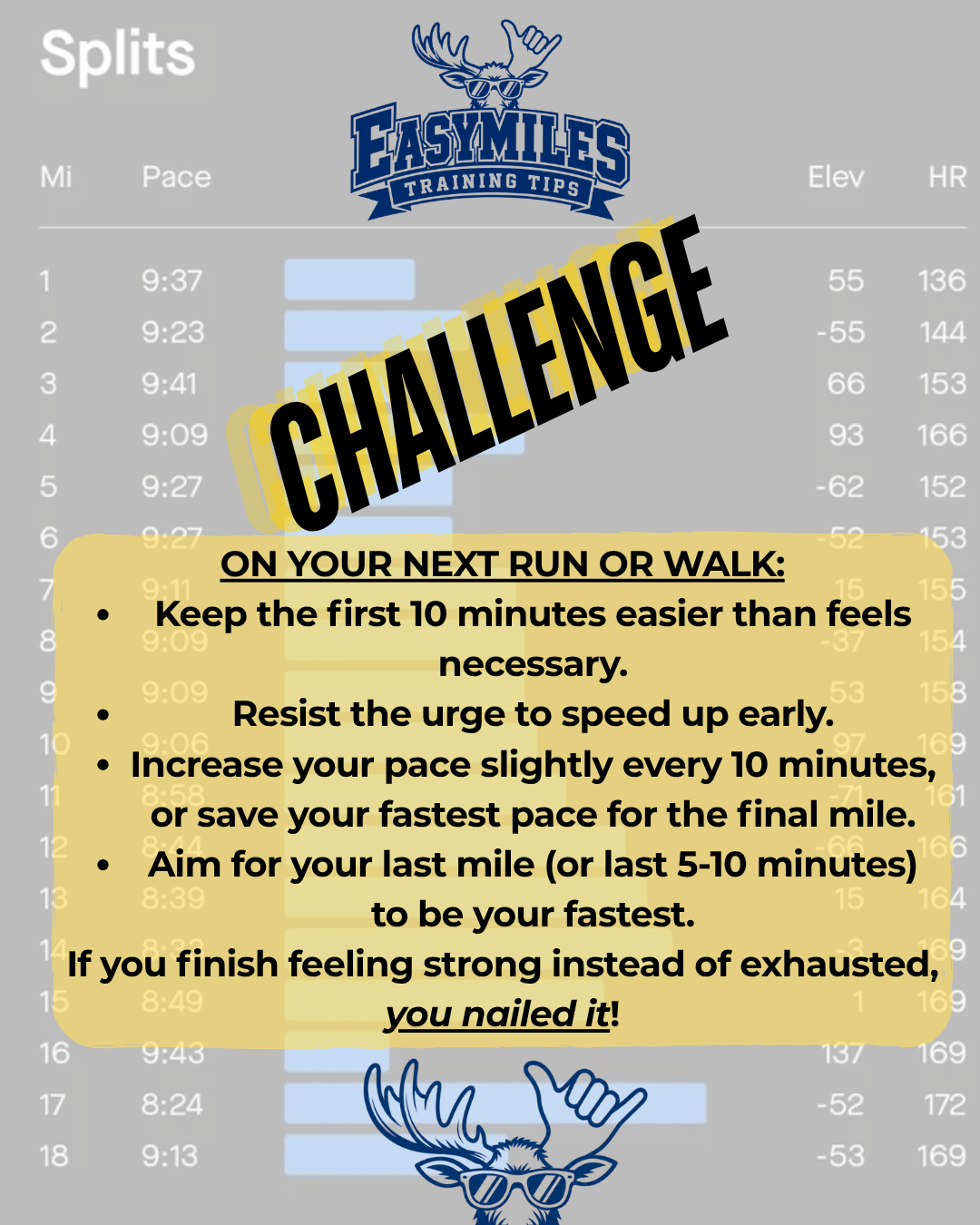
Try This on Your Next Run
Instead of asking,
"How fast can I start?"
Ask,
"How strong can I finish?"
You may be surprised by how much better you feel and how much faster you become.
Need Help Training?
At EasyMoose Running Company, we provide FREE personalized training plans for runners and walkers of every fitness level. Whether you're training for your first 5K or your next personal best, we'll help you build a plan that fits your goals.