The EasyMoose 10-Point Running Form Scan
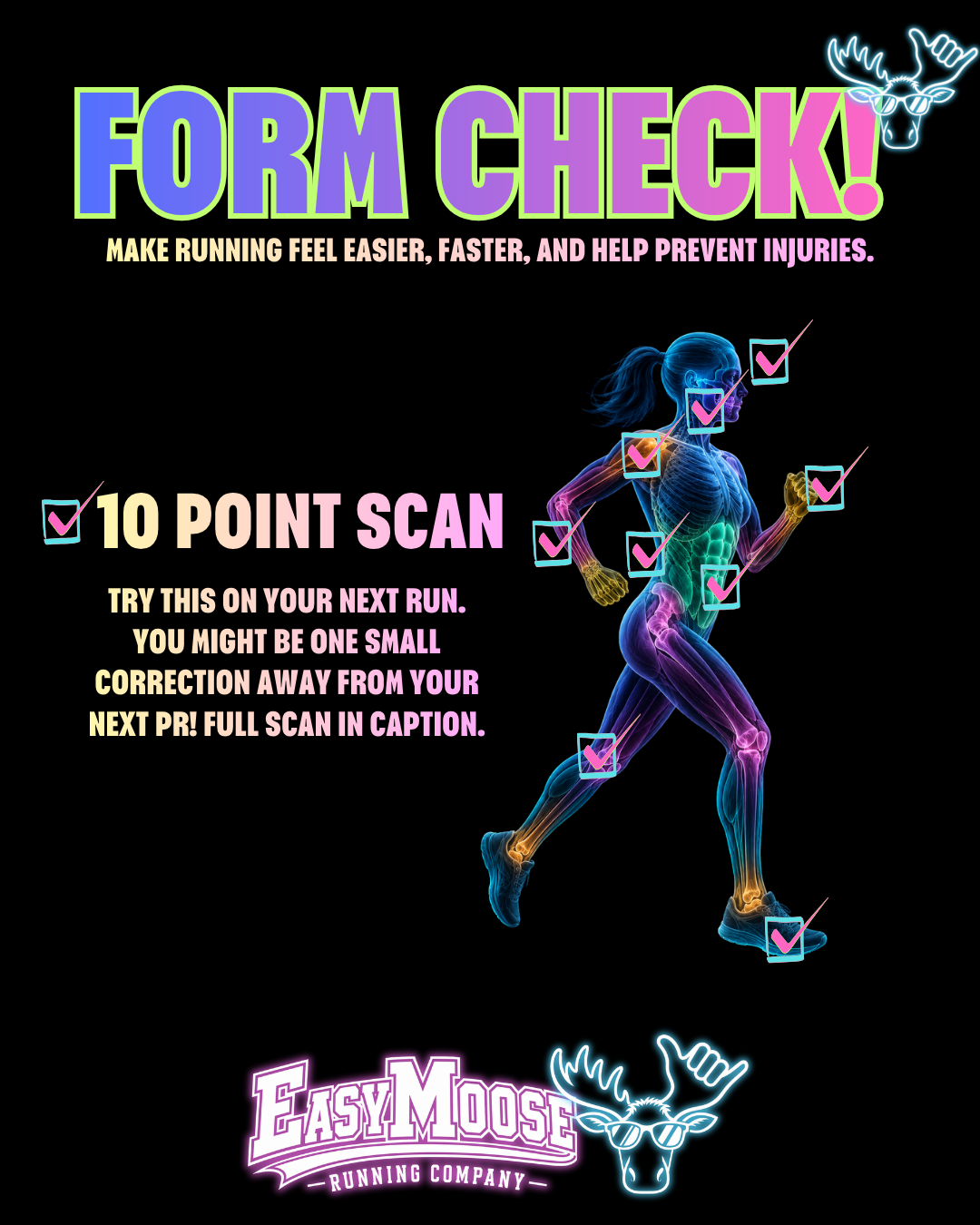
A Simple Head-to-Toe Check That Can Make Every Run Feel Better
One of the biggest misconceptions about running is that good form only matters for elite athletes.
The truth is, every runner benefits from better running mechanics. Whether you're training for your first 5K or chasing a marathon PR, efficient form helps you run farther, waste less energy, and reduce your risk of injury.
The good news? You don't need to overhaul everything overnight.
At EasyMoose, we recommend doing a quick 10-point form scan every few minutes during your run. It only takes a few seconds and helps you catch bad habits before they become sore muscles or nagging injuries.
Let's start at the top.
1. Eyes
Your eyes control more than you think.
Instead of staring at your feet, look about 15 to 30 feet ahead. Your body naturally follows your gaze, so looking forward encourages better posture and helps you anticipate changes in the road or trail.
Quick check: Are you looking ahead, or are you watching every footstep?
2. Face & Jaw
Many runners carry unnecessary tension in their face without realizing it.
A clenched jaw often means your neck, shoulders, and arms are tense too. Relax your facial muscles and let your mouth stay slightly open if needed.
Running should feel controlled, not strained.
Quick check: Can you smile?
3. Shoulders
One of the easiest signs of fatigue is shrinking into yourself.
As you get tired, your shoulders begin creeping toward your ears.
Every few minutes, consciously drop them back down and relax.
Loose shoulders allow your arms to swing naturally and make breathing easier.
Quick check: Are your shoulders relaxed or are they touching your earlobes?
4. Arms
Your arms help drive your rhythm.
Keep your elbows bent around 90 degrees and swing them forward and backward, not across your body.
Crossing your arms causes unnecessary torso rotation, wasting energy that should be moving you forward.
Think smooth and controlled.
5. Hands
A surprising amount of tension starts in your hands.
Many runners ball their fists so tightly that they finish with sore forearms.
Instead, imagine you're gently holding a potato chip or a small marshmallow. Firm enough not to drop it, gentle enough not to crush it.
Relaxed hands promote relaxed arms.
6. Posture
Good posture doesn't mean standing perfectly straight.
Instead, think "run tall."
Imagine a string gently pulling you upward from the top of your head.
Allow a slight forward lean from your ankles, not from your waist.
Leaning from your hips often leads to low back pain and inefficient movement.
7. Core
Your core acts as your body's stabilizer.
You don't need to flex your abs the entire run.
Instead, lightly engage your core, similar to the feeling of preparing for someone to poke you in the stomach.
A stable core helps transfer power efficiently from your upper body to your legs.
8. Knees
Watch where your knees travel during each stride.
Ideally, they should move straight ahead.
If your knees consistently collapse inward, it places additional stress on your knees, hips, and ankles and may increase your injury risk over time.
Strengthening your hips and glutes can often improve knee alignment.
Quick check: Are your knees staying in line with your feet?
9. Feet
Avoid reaching your foot far out in front of your body.
This is called overstriding, and it acts like putting on the brakes with every step.
Instead, aim to land with your foot underneath your hips.
You should also hear relatively quiet footsteps.
Heavy slapping often means you're landing too hard or overstriding.
Think light, quick, and quiet.
10. Cadence
Many runners assume faster means taking longer strides.
Usually, the opposite is true.
Efficient runners generally take quicker, shorter steps rather than long bounding strides.
You don't need to count every step.
Simply think about increasing turnover slightly while keeping your stride relaxed.
Your body will often become more efficient naturally.
You Don't Have to Fix Everything Today
One of the biggest mistakes runners make is trying to change every aspect of their form during a single run.
Don't.
Choose one or two checkpoints each run and focus only on those.
Over time, these small improvements compound into smoother, faster, and more enjoyable running.
Remember, there isn't one perfect running style that fits everyone.
The goal isn't to look like an Olympic runner.
The goal is to find the most efficient version of your stride.
Need Help Improving Your Running?
At EasyMoose, we offer FREE customized training plans based on your experience level, goals, and schedule.
Whether you're training for your first mile or your next marathon, we'd love to help.
Comment "PLAN" on any of our social media posts or reach out through our website, and we'll help you take your next step with confidence. 🫎